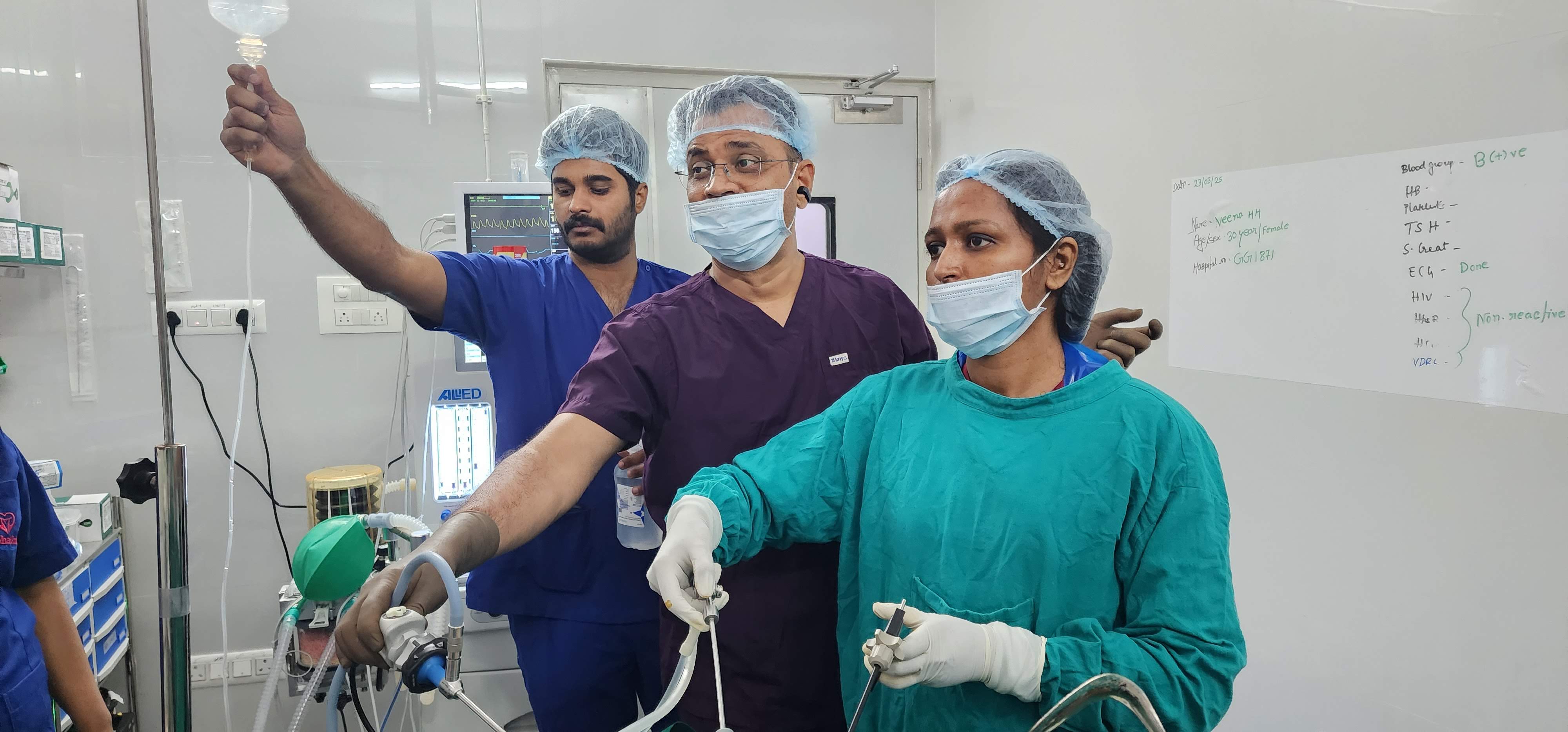
Precision care.
Minimally invasive.
Faster recovery.
Advanced laparoscopic surgery and comprehensive gynaecological care — by Dr. Rashmi T N, DMAS (Germany).
Smaller incisions. Less pain. Shorter hospital stay. Back to your life, sooner.
Comprehensive gynaecological care
From routine consultations to complex surgical cases — Dr. Rashmi T N provides expert diagnosis and treatment for a full range of women's health conditions.
Diagnosis, hormonal management, lifestyle guidance, and surgical options (ovarian drilling via laparoscopy) for PCOS.
Medical and minimally invasive surgical management of fibroids — including laparoscopic myomectomy.
Evaluation and laparoscopic removal of ovarian cysts — distinguishing simple from complex cysts with appropriate management.
Diagnosis and laparoscopic surgical treatment for endometriosis — one of the most undertreated causes of pelvic pain and infertility.
Investigation and treatment for heavy, irregular, or unexplained uterine bleeding — medical and surgical options.
Minimally invasive examination and treatment of conditions inside the uterus — polyps, fibroids, septum, and more.
Keyhole surgery for a broad range of gynaecological conditions — with faster recovery, less pain, and smaller scars.
Cervical screening, Pap smear, and colposcopy for detection and management of cervical abnormalities.
Routine gynaecological check-ups, reproductive health screening, and wellness consultations for women at every stage of life.
The same results. A fraction of the recovery.
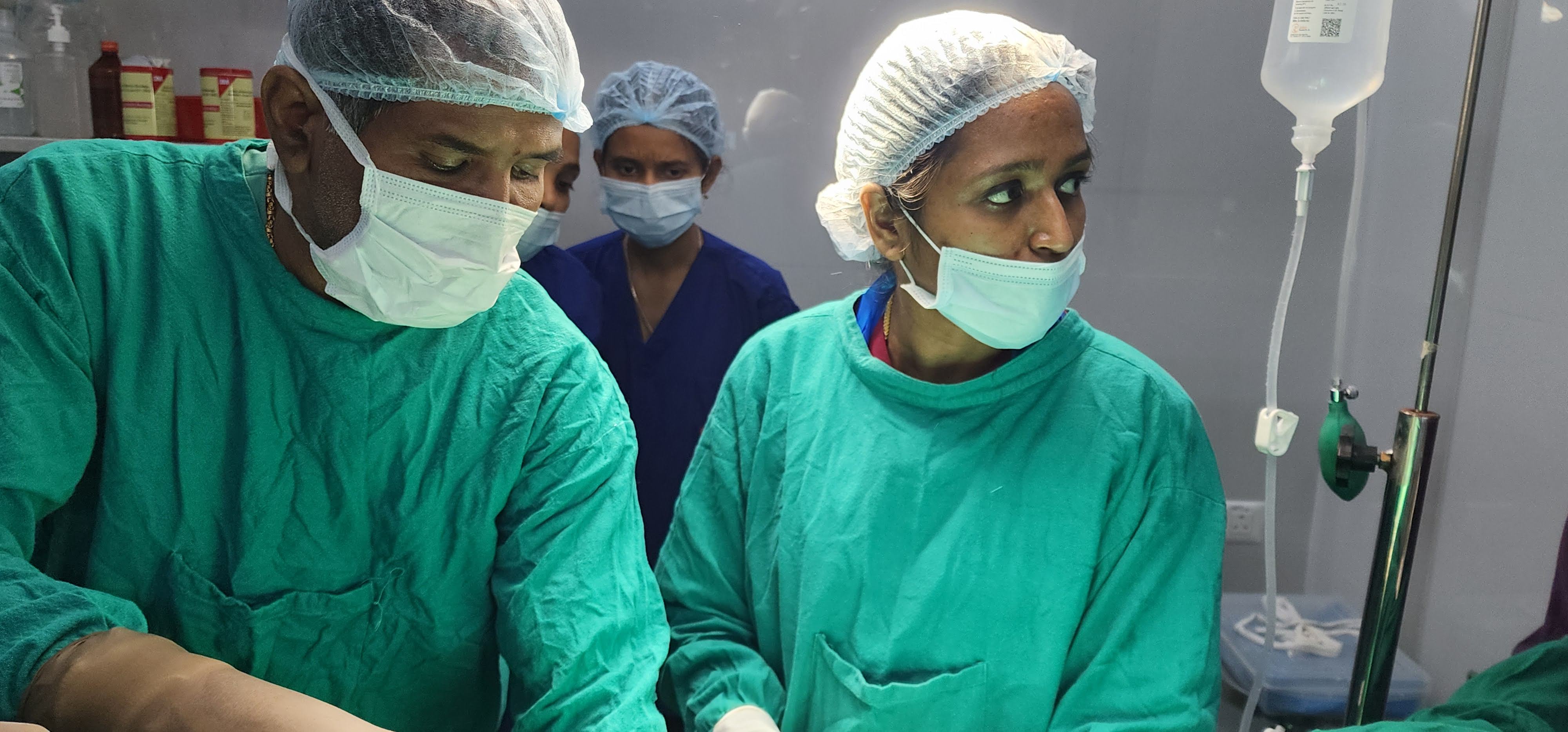
Laparoscopic (keyhole) surgery uses tiny incisions and a camera to perform procedures that once required large open cuts — with dramatically better outcomes for patients.
Faster recovery — most patients return to light activities within 3–5 days instead of 4–6 weeks.
Less post-operative pain — smaller incisions mean significantly less discomfort and fewer painkillers needed.
Shorter hospital stay — most laparoscopic procedures are day-care or require only an overnight stay.
Minimal scarring — tiny incisions leave almost invisible marks compared to open surgery.
Better visualisation — the camera provides a magnified view, often allowing greater precision than open surgery.
Gynaecology & Surgery — FAQ
Laparoscopic surgery can treat a wide range of gynaecological conditions including endometriosis, uterine fibroids, ovarian cysts, ectopic pregnancy, blocked fallopian tubes, PCOS-related ovarian drilling, and abnormal uterine bleeding. It can also be used for diagnostic purposes when the cause of pelvic pain or infertility is unclear.
Recovery from laparoscopic surgery is significantly faster than open surgery. Most patients are discharged within 24 hours and can return to light daily activities within 3–5 days. Full recovery typically takes 1–2 weeks, compared to 4–6 weeks for open surgery.
Yes. Laparoscopic surgery is considered very safe and is now the gold standard for many gynaecological procedures. Dr. Rashmi T N holds the DMAS (Diploma in Minimal Access Surgery) from Germany — one of the most rigorous international qualifications in minimally invasive surgical technique.
Hysteroscopy is a procedure in which a thin, lighted camera is inserted through the cervix to examine the inside of the uterus. It is used to investigate or treat abnormal uterine bleeding, polyps, fibroids inside the uterine cavity, uterine septum, and to assess the uterus in cases of recurrent pregnancy loss or infertility.
Common signs of PCOS include irregular or missed periods, excess facial or body hair, acne, weight gain, and difficulty conceiving. Diagnosis is confirmed through a combination of symptoms, blood tests (hormonal profile), and an ultrasound. If you suspect PCOS, a consultation with Dr. Rashmi T N will provide clarity and a clear management plan.